Jensen Huang's sudden departure from NVIDIA exposes a challenge familiar to many family enterprises: when a founder becomes indispensable, the company's greatest strength can also become its greatest vulnerability. In family businesses, succession often falters because the founder retains the key relationships, decisions, and authority, even when the next generation is ready to lead. True succession is not simply transferring ownership or appointing a new CEO. It is transferring the invisible capital that enables an enterprise to thrive beyond its founder.
Read Article
The SS United States, once the fastest ocean liner in the world, is being sunk off Florida. For me, this is personal. More than sixty years ago, it carried my 21-year-old mother to America after she and her parents escaped Soviet repression in East Germany. She carried little luggage, but a lifetime of experiences that would shape the generations that followed. The ship may disappear beneath the sea. What my mother carried aboard never will.
Read Article
What happens when you have built the life you always wanted and discover that you are genuinely happy? A client recently asked me to coach him, not to overcome a problem or achieve something more, but simply to remain happy. I found his request both fascinating and daunting. We spend so much of our lives pursuing happiness, but what happens when we finally arrive? Can we learn to enjoy what we have without constantly trying to improve it? And could our efforts to hold on to happiness become the very thing that threatens it?
Read Article
This is the final article in a three-part series on High-Performance Team Leadership, exploring productivity, team climate, and people development. Why do some exceptionally talented employees struggle when given greater leadership responsibilities? Drawing on executive coaching experiences and research, this article explores how leaders develop potential through challenging assignments, meaningful feedback, and opportunities to take ownership. It examines why developing future leaders requires more than identifying talent: it requires creating the conditions in which people can grow into greater responsibility.
Read Article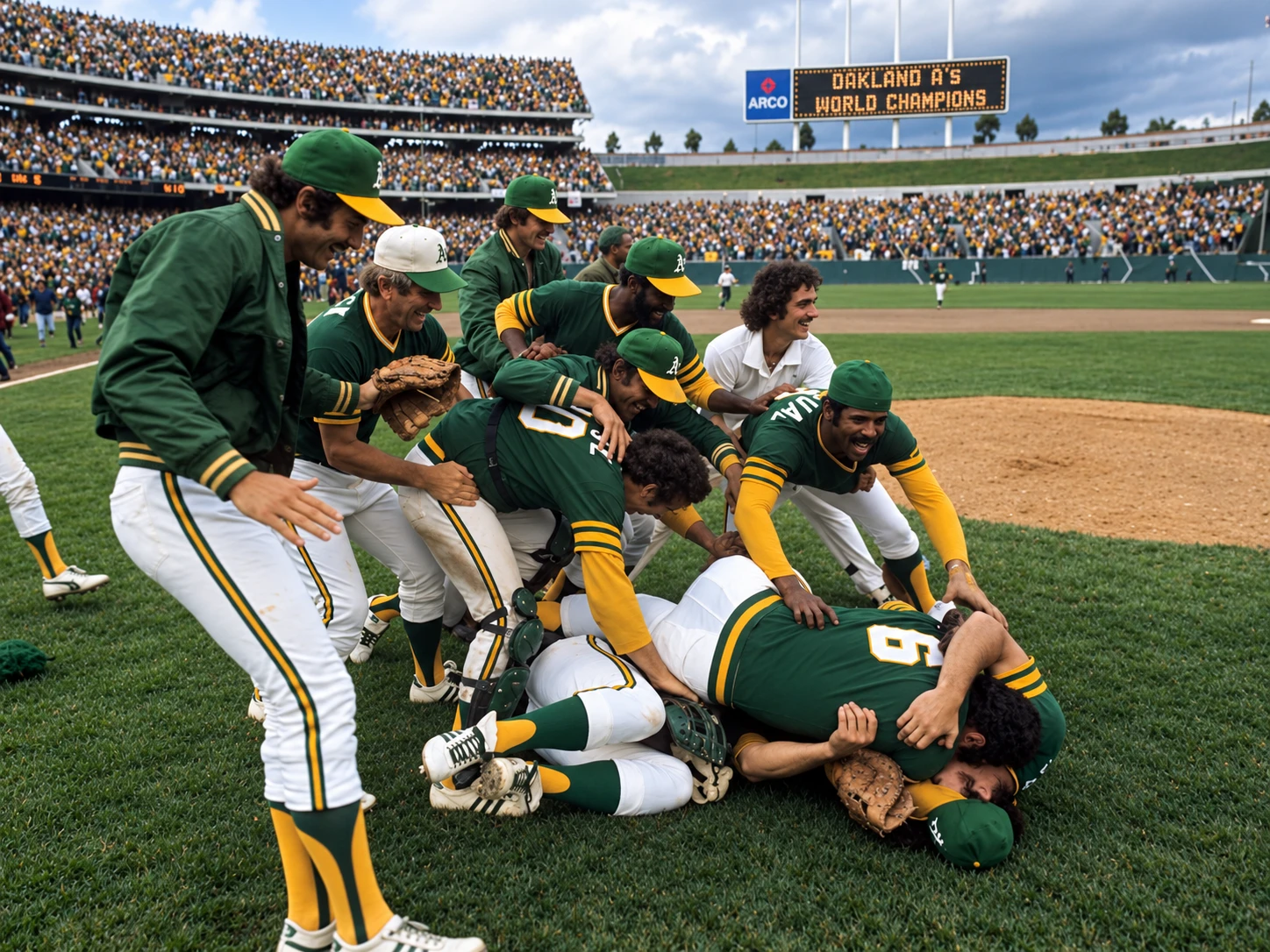
This is the second article in a three-part series on High-Performance Team Leadership, exploring productivity, team climate, and developing high-potential employees. What holds a team together when pressure rises, relationships become strained, and people disagree? Drawing on a real coaching experience, the remarkable story of the Oakland Athletics, and research on team cohesion, this article explores how shared norms, cooperation, and effective communication shape team climate. It examines why sustainable performance depends on people's ability to trust one another, handle disagreements, and remain committed to a common purpose.
Read Article
This is the first in a three-part series on High-Performance Team Leadership, exploring productivity, team climate, and developing high-potential employees. Why do talented, hardworking teams sometimes perform far below their potential? Drawing on executive coaching, sports psychology, and research, this article examines how motivational and coordination losses undermine productivity. It explores how clear roles, shared accountability, and the right balance between results and process objectives help leaders turn individual effort into collective performance.
Read Article
Families often measure success by the company, the dividends and the financial balance sheet, while the wealth that holds them together goes unmeasured. Starting from a failing fruit-juice production line in Argentina, this blog introduces the six forms of Invisible Capital: relational, governance and learning, cultural and identity, reputational, social, and spiritual and purpose. Each grows when shared and erodes when neglected. It also asks what the next generation is ready to carry, not only what it will own, and announces that the book is out now.
Read Article
A small bird trapped inside a car becomes an unexpected lesson in character. The story explores how values reveal themselves in ordinary, inconvenient moments. It also reflects on what changes when our children grow up and make decisions beyond our sight. Sometimes a brief glimpse from far away tells us more than years of watching closely.
Read Article
In many family businesses, conflicts do not repeat because people fail to see the problem, but because each person sees clearly what the other is doing wrong and much less clearly their own contribution to the pattern. Using a composite case, the blog explores how confrontation, accommodation and the need to be right can create a parallel decision-making system, erode trust and weaken both relationships and family governance. Change begins when each person stops waiting for the other to change first and takes responsibility for their own part in the dynamic.
Read Article
A succession plan can be legally flawless and still fail. The documents decide who owns what next. They can't create trust, emotional readiness or a founder's sense of life after the business. Here's why succession depends on the family as much as the paperwork.
Read Article
I once read that mourning matures the soul. My first response was resistance. This blog is what I found when I tested the sentence against my own losses.
Read Article
A familiar icebreaker question becomes a painful reflection on whom I would invite back for one final dinner: my parents or my late wife. The thought of seeing them again is comforting, but the second farewell feels almost unbearable. The deeper lesson is about the conversations we keep postponing with the people who are still here. In families, coaching, and governance, silence can wait only so long.
Read Article
Children learn not only from what adults deliberately teach them, but also from hearing how adults reason through real situations. In enterprise families, young people cannot be expected to develop judgment if they are excluded from the conversations in which judgment is formed. Preparing the next generation may begin by allowing them to remain at the table, listen, question and gradually learn how responsibility is understood.
Read Article
Windmillingness is the constant motion leaders create when they confuse activity with impact. By filling every silence, solving every problem, and carrying too much of the team’s thinking, they can unintentionally create dependency. I know this pattern because, for years, I mistook my own movement for momentum. Only later did I understand what all that activity was preventing in my team and in myself.
Read Article
A joyful dinner in Paros begins with music, laughter, and napkins in the air. But when people on the quay start watching, the energy in the room begins to change. What starts as spontaneous fun slowly becomes a performance. This essay reflects on the roles we play, the audiences we respond to, and the moment we remember to live again.
Read Article
In team coaching, I have learned that my presence begins before I ask a question. It begins in how I enter the room, how I manage my own urgency, and how I notice what is happening beneath the conversation. This article is a reflection on what I watch for in the room, and how that helps a team begin to see itself.
Read Article
On a flight from Paris to Tbilisi, a 77-year-old former Wharton professor shared a lifetime of insight in one sentence: learning matters more than grades, money, status, or achievement. This article explores why capable leaders drift from care into control — and how the discipline of focusing on "the horse you can hold" changes leadership after midlife.
Read Article
A reflection on how technology has trained us to expect instant solutions, even in the parts of life that require patience. Through a coaching lens, the article explores why trust, growth, leadership, and family relationships cannot be repaired with one perfect sentence. Some things still need to unfold at human speed.
Read Article
This blog explores the difference between adapting as we go and building without a clear purpose. Using a flight from Buenos Aires to Paris as the central image, it looks at why families need both spontaneity and structure. The core message: family governance, succession, and wealth planning work best when the structure follows the deeper purpose of the family.
Read Article
Some work can be done in fragments, but the work that matters most cannot. In this reflection, I share what writing my first book taught me about attention, leadership, and protected time. The question is simple: is your calendar built around your real work, or only around your visible work?
Read Article
Not every sadness is a disorder. Sometimes what looks like breaking down is the heart trying to make sense of love, loss, and change. This piece is an invitation to listen more deeply before we label ourselves or others.
Read Article
Family conflict is rarely about the issue on the table. Behind arguments about money, succession, ownership, or control often sit older questions of trust, fairness, voice, and belonging. If those tensions are not addressed early, conflict can become part of what the next generation inherits.
Read Article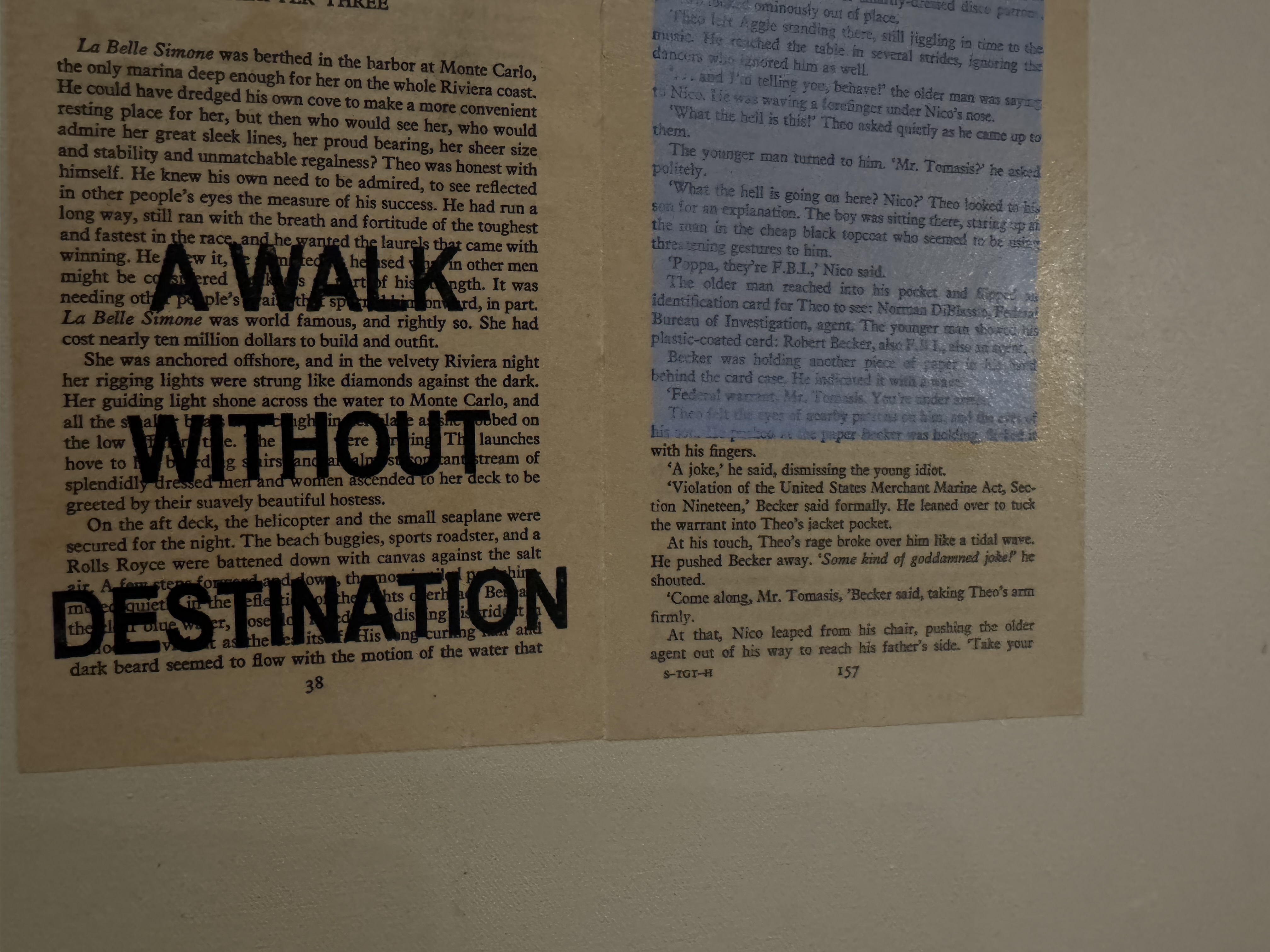
A phrase on a hotel room wall caught my attention: a walk without destination. The next day, walking the cliffs above the ocean with my daughter, I felt what those words meant. Not every important step in life begins with a plan or a clear outcome. Sometimes clarity does not come before the walk. Sometimes it comes because of it.
Read Article
A walk in Tasmania became a reflection on the quiet power of self-belief. Using the image of a tiny twig seeming to hold a massive rock, the post explores how real strength often looks small from the outside. Believing in yourself is not arrogance, but the inner steadiness to keep going before proof or confidence arrive. Sometimes the strength that matters most is simply the strength to hold.
Read Article
A personal reflection on selling my Rolex while writing my first book. Not only as a financial move, but as a way to create real commitment through sacrifice. On why meaningful work often requires deliberate discomfort. And how letting go of comfort can unlock focus, resolve, and deeper purpose.
Read Article
A personal reflection sparked by Jack London’s words in No Time to Die. On living versus merely continuing, and on the quiet discipline of staying awake to one’s own life. Written with gratitude, and with a wish for my daughter as she turns 32.
Read Article
“Be yourself” sounds simple until you notice how often you edit yourself to stay acceptable. Most high performers aren’t missing confidence, they’re managing the room, borrowing language, certainty, and priorities that don’t fit. Authenticity is not a trait, it’s a practice: one honest sentence, one clean boundary, one percent closer to yourself at a time.
Read Article
A long flight, a forgotten poem, and a question that wouldn’t let go. What if endless possibilities aren’t about having more options, but about releasing what no longer fits? A reflection on letting go, identity, and making space for what wants to emerge.
Read Article
A reflection on why we reserve joy for big moments and overlook the small ones. On lowering the threshold for joy and make it available now, not later. And on choosing gratitude as a way of living, not a reward for success.
Read Article
A January 1 reflection sparked by two poems, one by Robert Burns and one by A. J. Cronin. On plans that fail, not as mistakes, but as part of life’s terrain. On losing certainty and discovering that being lost is often the path itself. On understated courage, movement without guarantees, and staying present in the maze. And on trusting that a door will open, even if it’s not the one we imagined.
Read Article
Plans fail at the exact moment pressure enters the system. What matters then is not strategy, but what has been deeply practiced and embodied. Resilient teams rely on principles, shared understanding, and trust under stress. When the plan breaks, identity and adaptability decide what shows up next.
Read Article
A follow-on to The Founder’s Dilemma, through the lens of CEO exits. Why some departures create stability while others create shadow leadership. How identity and exit style shape whether authority truly transfers. And why letting go is as important as stepping down.
Read Article
A well-known Harvard case becomes a real family enterprise moment. A successor receives the title, but not the authority. The organization remains loyal to a founder who never truly stepped back. True succession begins with emotional separation, not announcements.
Read Article
A scene from Invictus captures belief under pressure. Not in speeches or slogans, but in what happens between players. It shows how athletes step across internal thresholds together. Belonging is earned, and performance begins with inner ownership.
Read Article
A simple remark from a client becomes a mirror for a familiar struggle. This reflection explores the difference between rest and escape. Through loss, rebuilding, and deliberate slowing down, alignment comes into focus. A reminder that a well-lived life still holds effort, but no longer needs rescuing.
Read Article
Life is not lived in equal moments, but in a few that stop us completely. This reflection returns to five such moments, the birth of my children. Times when presence replaced thinking and meaning needed no words. A reminder that a full life is measured in breathless moments, not busy ones.
Read Article
The Two Mirrors explores why self-awareness is harder than we think and how two invisible forces shape our behavior. One mirror reflects the story we tell ourselves. The other reflects how we believe others see us. Drawing on psychology and coaching practice, this blog shows why both mirrors distort reality. When we learn to read them honestly, growth becomes clearer, calmer, and more deliberate.
Read Article
This article is part of The Confidence Journey, a six-part series exploring what confidence really is, how it’s built, and why it matters in sport, in business, and in life. Part 6 closes the series with a simple truth: confidence is not a destination but a continuous journey. It grows, fades, rebuilds, and evolves with every choice to act despite doubt. From athletes under pressure to executives facing uncertainty, the lesson is the same. Confidence is built daily, step by step, in the quiet decision to keep moving forward.
Read Article
This article is part of The Confidence Journey, a six-part series exploring what confidence really is, how it’s built, and why it matters in sport, in business, and in life. Part 5 explores the shared lessons between athletes and executives. Whether on the track, the slopes, or in the boardroom, confidence comes from the same place: trust in preparation, resilience under pressure, and rhythm that restores flow. Confidence is the bridge where resilience meets strategy, allowing leaders and performers alike to act with clarity when it matters most.
Read Article
This article is part of The Confidence Journey, a six-part series exploring what confidence really is, how it’s built, and why it matters in sport, in business, and in life. Part 4 looks at coaching as the catalyst for confidence. A coach does not hand you belief, they help you uncover it by shining a light on blind spots, reframing fear, and turning hesitation into fuel.
Read Article
This article is part of The Confidence Journey, a six-part series exploring what confidence really is, how it’s built, and why it matters in sport, in business, and in life. Part 3 explores the origins of confidence, both the steady kind shaped by life experience and the situational kind sparked by preparation in the moment. From Ronaldinho’s creativity on the streets of Porto Alegre to the pressure of Camp Nou, we see how confidence is built over time and summoned when it matters most. The lesson is clear: self-awareness and preparation are the levers that turn uncertainty into momentum.
Read Article
This article is part of The Confidence Journey, a six-part series exploring what confidence really is, how it’s built, and why it matters in sport, in business, and in life. Part 2 of The Confidence Journey describes how moments of fear, doubt, and persistence quietly shape the foundation of self-belief. This piece invites you to reflect on your own journey and to recognize the moments that have already built your confidence.
Read Article
This article is part of The Confidence Journey, a six-part series exploring what confidence really is, how it’s built, and why it matters in sport, in business, and in life. Part 1 begins with the essence of confidence: not bravado or fearlessness, but the quiet belief that you can move forward even when doubt is present. It is the bridge between hesitation and action. From Olympic sprinters to entrepreneurs facing collapse, the lesson is the same. Confidence is not certainty in outcomes, it is trust in your ability to respond. The journey starts here, with that first step across doubt.
Read Article
A strange dream left me thinking about the future of work in a way I could not ignore. In it, a client was told he had to share part of his salary with AI, not because of underperformance and not because of cost-cutting, but because the AI itself had filed a request for more resources. What began as a bizarre scene quickly became a mirror for the questions many of us are already asking: if technology is treated as a colleague, where does that leave human dignity, value, and worth? In this piece I explore what that dream revealed about the shifting workplace and the choices leaders face in shaping it.
Read Article
We live in a world that rewards titles, roles, and results. But when those shift or disappear, many of us feel lost, because we have tied our sense of self to things outside of us. The Core Identity Model offers a way back to the part of ourselves that does not crumble when life changes. It moves us from defining ourselves by what we do or the stories we carry, to knowing who we are at our core. This is where growth has no ceiling, and resilience has no end.
Read Article
We tend to think grief belongs only to death, but it shows up every time a part of our identity breaks apart. A marriage ends. A business collapses. A dream dissolves. And sometimes, it all happens at once. This is a story about walking beside someone through that kind of storm, and about what I learned when I faced my own. It is about the difference between sorrow and despair, and how Elisabeth Kübler-Ross’s Change Curve can guide us not only through loss, but also through growth. Most of all, it is about why healing is less about fixing and more about walking together until light appears again.
Read Article
There’s a moment many of us recognize, even if we rarely name it. You care deeply about someone you love, about what you see on the news but the pain feels too big, and the ways to help feel too small. So you freeze. Not because you don’t care, but because you don’t know where to put all that care. This blog is about that moment. And about how we can move from feeling overwhelmed by empathy to something steadier. Something more sustainable. Compassion that stays.
Read Article
The stories we tell ourselves shape our identity, our choices, and our relationships. Some are empowering. Others quietly limit us. Often these stories are driven by inner saboteurs like the Judge, the Avoider, or the Hyper-Achiever. Once we recognize these patterns, we can begin to shift from self-criticism to self-awareness. This blog offers insights and practical steps to help you recognize the story you are in and choose a new way forward.
Read Article
René Sonneveld