
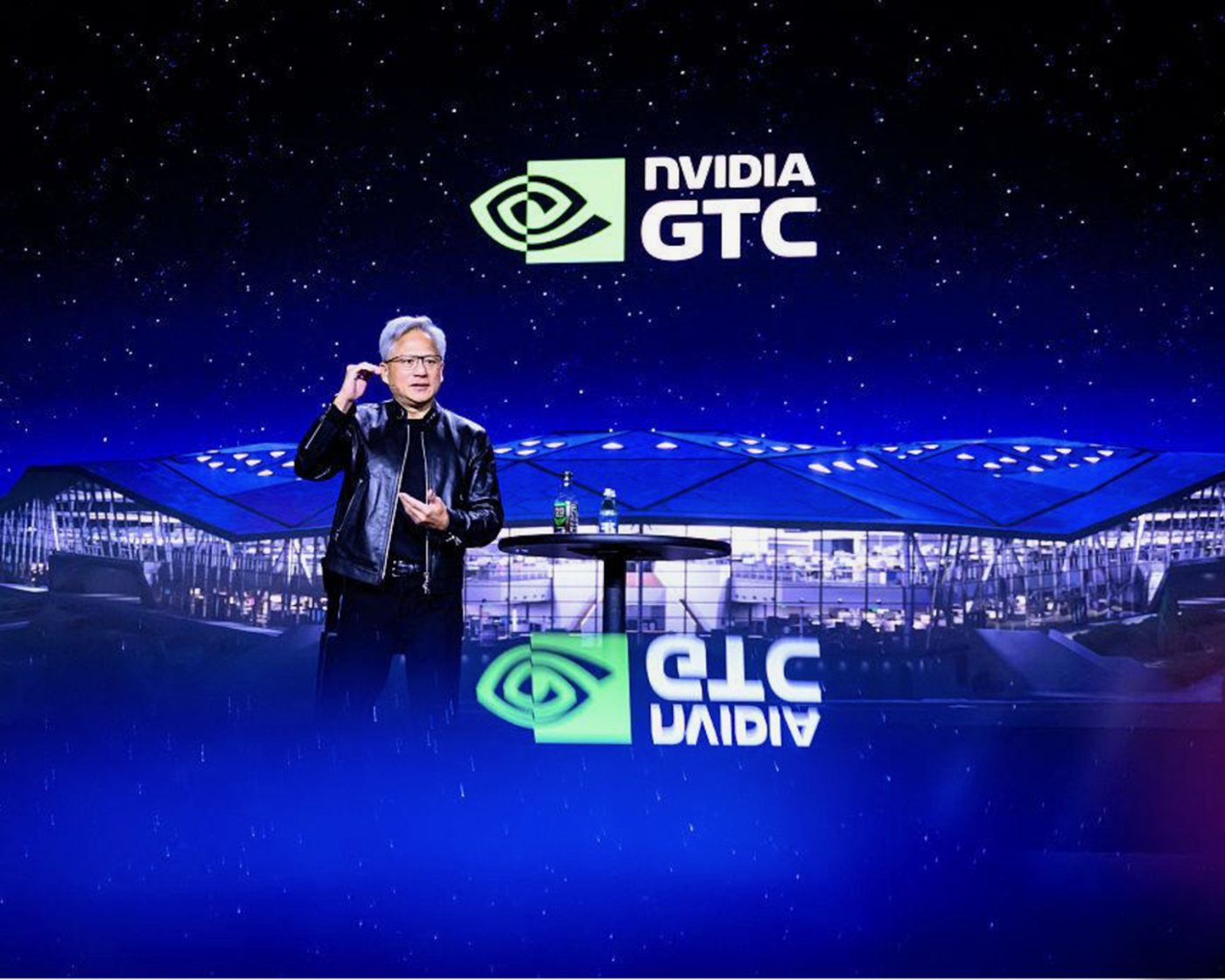




On November 12, 2026, NVIDIA announced that Jensen Huang had resigned as President, CEO, and board member, effective immediately. Four days earlier, its board had opened an independent investigation. The company did not publicly specify the reason for his resignation.
CFO Colette Kress became interim CEO, and the board began searching for a permanent replacement.
After 33 years under its co-founder, one of the world's most valuable companies faced a question I encounter frequently in family enterprises: What happens when the person who built the organization has also become its center of gravity?
Influence without ownership
NVIDIA is not a family-owned company. According to its 2026 proxy statement, Huang beneficially owned 3.58% of its shares as of March 23, without special voting rights. He could not control NVIDIA through ownership.
Yet the company's leadership had many of the characteristics of a founder-dominated family enterprise.
Huang shaped NVIDIA's strategy, culture, and relationships as it grew from a graphics-chip manufacturer into a company at the center of the artificial intelligence revolution. His unusually flat management structure put him in direct contact with a remarkable number of executives. In a public interview, he said he had 60 direct reports.
That arrangement had advantages. It shortened the distance between information and decisions and reflected a leader who understood both the technology and the market. NVIDIA's extraordinary success is part of that story.
But success can obscure a dependency. When important decisions, relationships, and institutional knowledge converge on one person, leadership is powerful, but succession becomes difficult.
The two balance sheets
In my work with enterprising families, I often distinguish between two balance sheets.
The first records what the business owns and earns: its assets, liabilities, and financial performance.
The second records its invisible capital: the trust and relationships, governance and learning, culture and identity, reputation, social connections, and shared purpose that help an enterprise endure.
NVIDIA developed enormous amounts of both. Huang's credibility with customers and partners, his long-term technological conviction, and the culture he fostered were part of the company's competitive strength.
The question is how much of that strength had become embedded in NVIDIA itself, and how much remained bound to Huang personally.
If key relationships run through the founder, who can sustain them when the founder is gone?
If executives are accustomed to the founder making the difficult calls, where have others learned to exercise independent judgment?
If the founder embodies the company's identity, can its culture survive a different leader?
An enterprise can be financially exceptional yet institutionally vulnerable.
When loyalty complicates governance
NVIDIA's board provides another parallel with family enterprises. Before Huang's resignation, NVIDIA had no board chair, relying instead on a lead independent director. Several directors had served for decades.
One governance expert quoted by Fortune described it as a "captive board." Its newly appointed first chair, Harvey Jones, has been a director since 1993.
Long relationships are not evidence of bad governance. They can provide continuity, trust, and precious institutional memory. Jones's experience may be particularly valuable at a moment of upheaval.
But long familiarity can also make challenge harder. Directors who have shared in a founder's extraordinary success must still be willing to question that founder, challenge the structure around the individual, and insist on preparation for the day the founder is no longer there.
NVIDIA had no publicly named successor. The immediate appointment of an interim CEO and the launch of a permanent search brought its succession vulnerability into plain view.
Its flat structure may also have made it harder for potential successors to develop the independent authority that the CEO role demands.
This exposes a paradox I have encountered in family enterprises: the very leadership qualities that make founders extraordinarily successful can prevent others from developing the capacity to succeed them.
A familiar pattern in family enterprises
I have seen the gap between title and authority firsthand.
In one family enterprise I worked with, a father had handed his son the CEO title. Yet the father continued making important decisions, calling customers, and redirecting employees. The son was expected to deliver results, but people still looked to his father for the final answer.
On paper, succession had taken place. Inside the company, it had not.
This is why naming a successor is only the beginning.
A founder can delegate the position while retaining the power. The next generation, or a non-family executive, can inherit accountability without having had the opportunity to exercise genuine authority.
And because the business continues to perform well, the real conversation is often postponed.
Boards and families need to ask harder questions well before a transition.
Who owns the key relationships? Who can decide without seeking the founder's approval? Can senior leaders disagree openly? Have they exercised consequential authority while the founder is still available to support them?
These are not questions that can be resolved simply by naming a successor.
They require founders to recognize that preparing others to lead means allowing them to make decisions, develop relationships, and sometimes do things differently.
It also requires a board willing to have uncomfortable conversations long before circumstances make those conversations unavoidable.
The real measure of a founder's legacy
Jensen Huang built something extraordinary. His contribution to NVIDIA and to modern computing is undeniable.
The lesson from his sudden departure is not that his leadership approach was wrong. Much of NVIDIA's success can be attributed to it.
The lesson is that a company must eventually become capable of functioning without the individual who made it successful.
For family enterprises, this is particularly important. The challenge is not merely to transfer shares or appoint the next generation. It is to transfer the relationships, knowledge, authority, and shared purpose that allow the enterprise to continue.
Succession is not simply a document naming a replacement. It is the gradual transfer of invisible capital from an individual to an institution.
The ultimate responsibility of a founder is not merely to build a successful enterprise.
It is to build an enterprise capable of succeeding without the founder.
René Sonneveld is an ICF Master Certified Coach (MCC), working with executives, boards, and enterprising families. He is the author of Invisible Capital: What Sustains Enterprising Families Across Generations and the award-winning The Elephant in the Family Room.