



.svg.png)

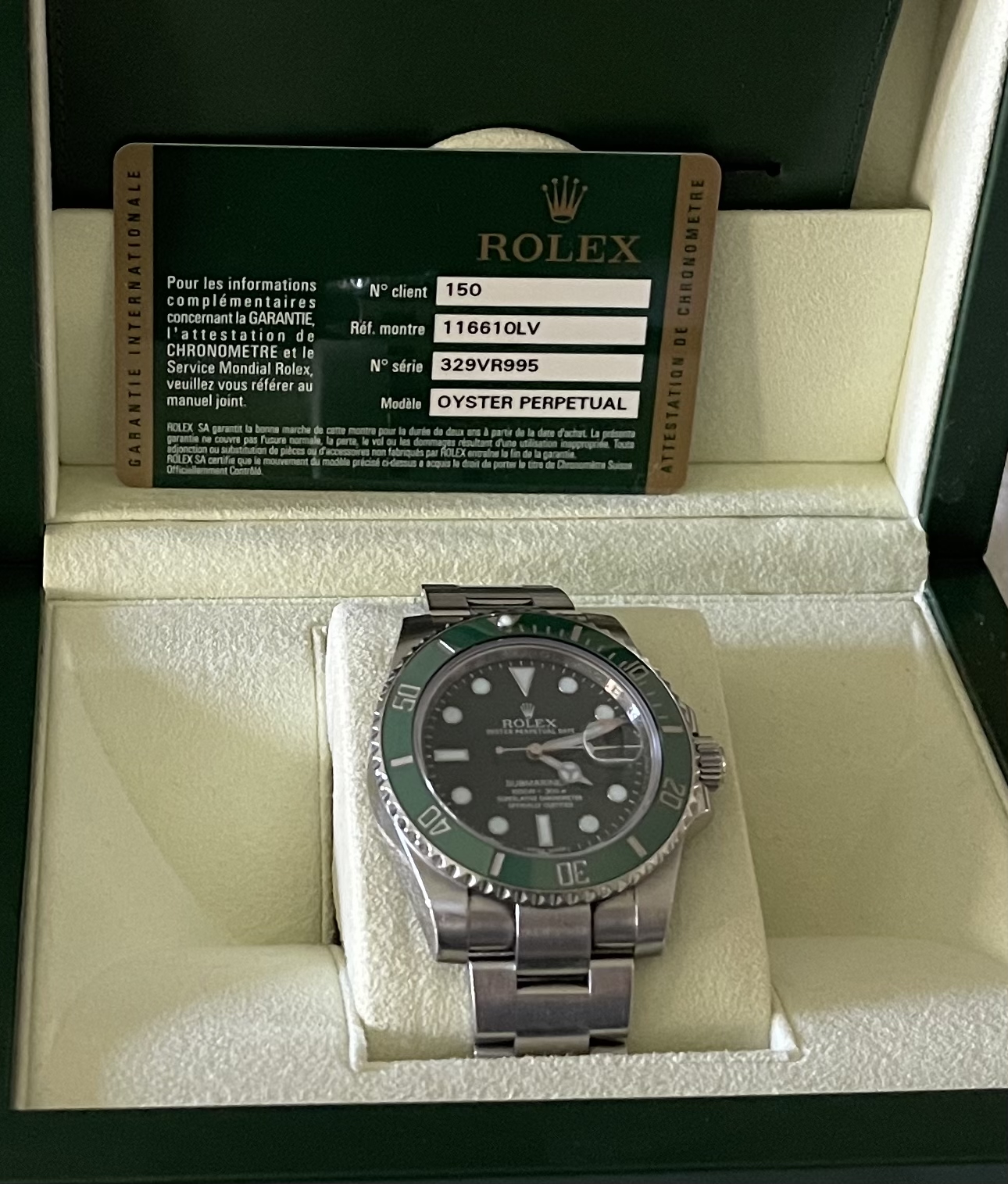
There's a particular weight to a Rolex on your wrist. Not just the physical heft of Swiss engineering, but the accumulated gravity of what it represents: success achieved, milestones marked, a tangible reminder of how far you've traveled. Mine had been with me through boardrooms and celebrations, long flights and family moments, catching light during handshakes that sealed deals and quiet moments alike. It marked time faithfully, even when I felt less certain about how I was using mine.
The moment that triggered the decision was almost comically ordinary. A friend noticed the watch during a diner at my home, commented on it, and asked to try it on. As a good Dutchman, my native instinct kicked in immediately. Without overthinking it, I said, “Do you want to buy it?”
He laughed. I half-laughed. But something had already shifted.
The Currency of Commitment
What drove that spontaneous offer wasn't primarily financial. Yes, I was writing my first book and could use the funds. But something deeper was stirring, an instinct that the creative endeavor before me required more than just time and talent. It demanded sacrifice. It needed skin in the game.
The money from selling my watch would help fund the practical aspects of my writing project, certainly. But more importantly, I needed to feel something. I needed the slight ache of loss, the empty space on my wrist that would remind me daily of the choice I'd made. I was trading comfort for commitment, trading a symbol of past achievement for the uncertain promise of future creation.
This wasn't masochism. It was strategy. It was understanding that we don't truly commit to our deepest aspirations until we've put something meaningful at stake.
Ask yourself: What are you holding onto that's keeping you comfortable rather than pushing you forward? What possession, habit, or security blanket is your wrist wearing while your hands remain idle?
The Pain That Propels
We live in an age obsessed with comfort optimization. Every app, every life hack, every productivity tool promises to make things easier. But the uncomfortable truth is that our most meaningful accomplishments rarely emerge from comfort. They're born from deliberate discomfort, from the creative tension between where we are and where we're determined to go.
The absence of my Rolex became a kind of productive pain, a daily reminder of the commitment I'd made to myself. Each time I glanced at my bare wrist to check the time, I felt it. Each time someone asked about my watch, I had to explain that I'd sold it to invest in something less tangible but infinitely more personal.
That discomfort kept me honest. On days when procrastination whispered its seductive promises, when the blank page seemed too vast to fill, my empty wrist spoke louder. It said: You already paid the price. Now do the work.
Consider: What form of productive discomfort might serve your current aspiration? What would create the right amount of tension to keep you moving forward without crushing you under pressure?
Echoes Across Time
I'm hardly the first to discover the power of strategic sacrifice. History is rich with examples of people who understood that to gain something profound, they first had to release their grip on something comfortable.
J.K. Rowling famously wrote much of the first Harry Potter book in cafés because her unheated apartment was too cold for her baby daughter. She had no money, no security, and nothing to fall back on. That precarity, while certainly not chosen, became the crucible in which her determination was forged. She couldn't afford to fail because she'd already lost everything except her story.
Paulo Coelho, before becoming one of the world's most-read authors, was a successful lyricist in Brazil's music industry. But at 38, he walked away from that security to pursue his calling as a novelist. He was, by conventional measures, starting over and trading certainty for the terrifying blank page. His first book after that decision was "The Alchemist," which has sold over 150 million copies. But he couldn't have written it while clinging to the safety of his previous success.
Closer to the world of business, Sara Blakely, founder of Spanx, spent her last $5,000 savings to create her prototype. She didn't have wealthy backers or a safety net. She had an idea and the willingness to risk what little she had on her belief in it. That scarcity focused her mind wonderfully. Every dollar mattered. Every decision carried weight. That intensity of focus contributed to building a billion-dollar company.
Even spiritual figures have understood this principle. The Buddha, born Prince Siddhartha, left behind a palace, royal privilege, and guaranteed comfort to seek enlightenment. His great insight required great renunciation. He had to become hollow before he could be filled.
The Alchemy of Exchange
What these stories reveal isn't that poverty or loss are virtues in themselves. Rather, they demonstrate that the act of consciously exchanging one form of value for another creates a psychological shift. When we make such a trade, when we sell the watch, quit the comfortable job, spend the savings, or leave the palace, we're not just changing our external circumstances. We're rewiring our internal commitment architecture.
The exchange transforms us from people who wish or hope or might someday into people who have already begun paying the price. We become investors in our own aspirations, and like any investor, we're now motivated to see our investment succeed.
This is why New Year's resolutions so often fail. They cost us nothing. We declare them freely and abandon them just as easily because we've put nothing at stake. But when you've sold your watch, invested your savings, or burned your bridges back to the comfortable past, quitting becomes its own form of loss, a waste of the sacrifice already made.
The Questions Worth Asking
As you reflect on your own aspirations, the book unwritten, the business unlaunched, the dream deferred, consider these questions:
What are you protecting? Are there possessions, positions, or patterns you're maintaining because they're genuinely serving your highest goals, or because they're simply familiar?
What would be the right size sacrifice? It should be significant enough to create productive discomfort but not so large that it creates paralyzing desperation. My Rolex was meaningful but not devastating. What's your equivalent?
What story will your sacrifice tell? Every time I explained why I'd sold my watch, I was reinforcing my commitment to my book. The narrative we tell about our sacrifices shapes how we relate to our goals. What story do you want to be telling?
Are you comfortable being uncomfortable? This might be the most important question. Our relationship with discomfort determines whether we'll sustain our efforts through the inevitable difficulties of meaningful creation.
The Empty Wrist, The Full Life
Months later, manuscript complete, I didn't rush to replace my watch. The bare wrist had become its own kind of reminder, not of loss, but of transformation. What I'd given up was never really about the watch at all. It was about releasing an old identity to make room for a new one.
The watch represented the person I had been: successful by external measures, comfortable in my achievements. The book represented the person I was becoming: someone willing to risk comfort for meaning, certainty for creation, the known for the possible.
We gain our deepest treasures not by adding, but by releasing. Not by protecting what we have, but by investing it in what we might become.
So I ask you, as I asked myself that day: What's your Rolex? And more importantly, what are you waiting for?







.png)


