




What Holds a Family Enterprise Together When Money Is Not Enough?
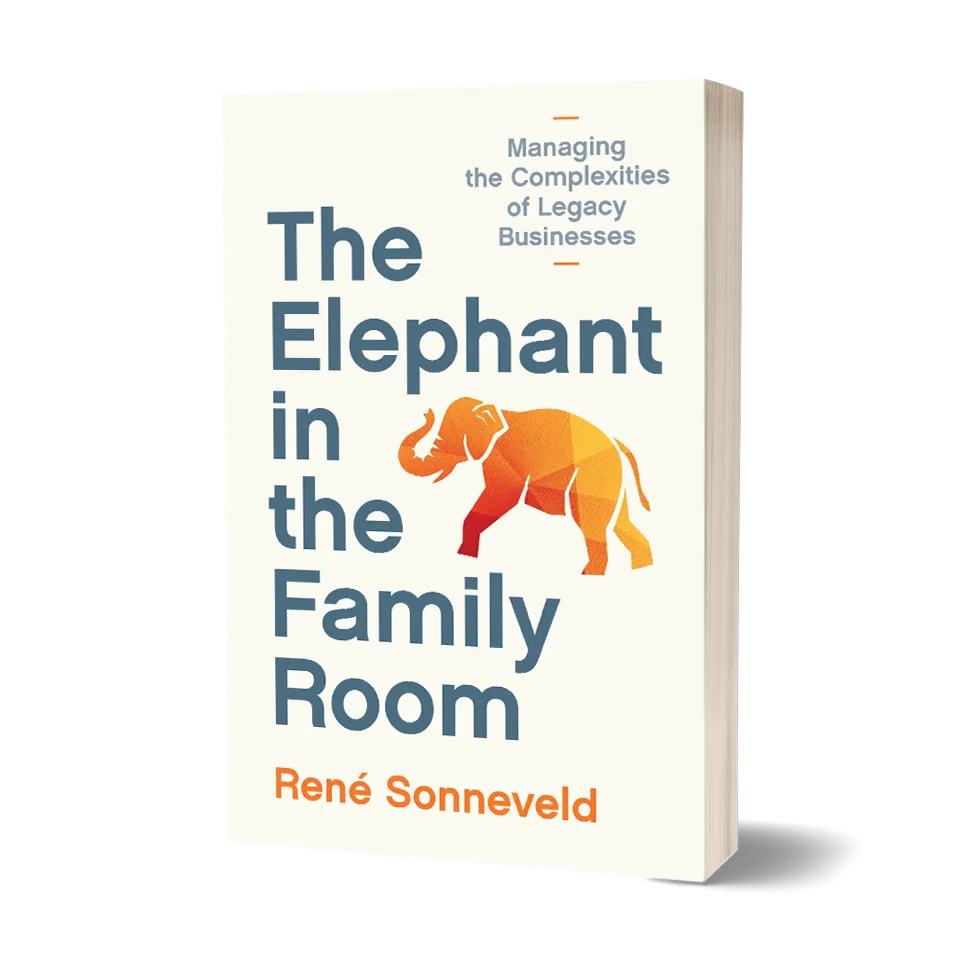
I did not write Invisible Capital because I wanted to write another book about family business. I wrote it because I kept seeing families measure success by the company, the dividends and the financial balance sheet, while the wealth that held the family together went largely unmeasured.
My first book was about the unspoken conflicts, inherited resentments and silent fears that erode trust from the inside. This second book begins from a different place: solving what is wrong does not automatically create what is strong.
What did a failing fruit-juice production line teach me about invisible wealth?
In the late 1980s, I moved to Argentina for love, not strategy. My wife, her two brothers and I built a small fruit-juice business with four employees, a secondhand truck, a handful of retail accounts and a production line we were convinced would change everything.
The production line was a disaster. Bottles broke, the sealing mechanism jammed, product was lost batch after batch, and we stood watching juice run across the floor while doing the mental arithmetic nobody wanted to say out loud.
What I feared most was not losing the business. It was losing the trust of my brothers-in-law. We eventually fixed the line, but the deeper lesson stayed with me: what held us together was our refusal to let one another down. That was Invisible Capital at work, even though I did not have a name for it yet.
How did that lesson follow me through my career?
I began as an international tax lawyer, moved through commodity trading and consumer goods, and later held senior leadership roles in finance. Working with enterprise families on succession, governance and wealth structures, I kept seeing that technical rigor could build the structure without preparing people to live inside it.
A structure can say who will own the shares, but it cannot make a successor feel legitimate. A family constitution can describe how siblings should make decisions, but it cannot make them trust one another. That realization led me toward coaching enterprise families and, eventually, toward this book.
Key Takeaways
- Every family enterprise carries two balance sheets: one written in numbers and the other in trust.
- Financial capital matters, but it cannot replace relationships, learning, identity, reputation, social networks or purpose.
- The six forms of Invisible Capital grow when shared, erode when neglected and are often missed only after they are gone.
- Strong governance helps invisible capital flow; it does not substitute for courage, honest conversation or repair.
- The real succession question is not only what the next generation will own, but what they will be ready to carry.
What is Relational Capital, and why does trust matter in a family enterprise?
Relational Capital is the trust, respect and empathy that hold a family together when life becomes uncertain. Financial capital can buy time; Relational Capital determines what a family does with that time when pressure rises.
I learned this first in the juice business. One evening, after another day of broken bottles and unanswered retailer calls, a question about a supplier payment became harder than it needed to be. We were too exhausted to admit we were scared, so we became sharp with one another instead.
The moment passed quickly but it stuck with me for days. It was a big lesson in trust.
Trust is built in small acts. Promises kept, information shared, decisions explained, disagreements honored rather than suppressed. This is also how trust affects family business succession. When transition comes, a family draws on the trust it has built beforehand.
Two brothers I worked with in the Netherlands fought often, but by the end of each week they were back in the same room. When real pressure came, it was the memory of repair that held them.
Conflict does not end families. Silence does. Trust grows through repair more than through agreement.
How does Governance and Learning Capital prepare a family for the next generation?
Governance and Learning Capital is the discipline and curiosity that turn structure into movement and decisions into shared understanding. Governance creates the structures through which a family learns, while learning keeps governance responsive and alive.
At a family offsite, several fourth-generation members told me their governance meetings felt like listening to conclusions already reached by the older generation. The structure was there. Participation was thin.
That changed when the family began bringing the family office's CFO and CIO into those meetings. Younger members could ask questions and hear the reasoning behind decisions. They were no longer asked to trust conclusions. They were invited to understand how judgment is formed.
If you want to know how to prepare the next generation for a family business, that is where I would start.
Family business governance and generational transition are often discussed separately. In practice, they are part of the same conversation. Boards, family councils and real decisions are places to practice responsibility before it is urgently required.
I think of governance as irrigation, not bureaucracy. Good governance creates just enough structure for trust, knowledge and responsibility to flow.
So it is worth asking, at the end of each year: what did this family actually learn, and not only what did it earn?
What is Cultural and Identity Capital, and what remains if the business is sold?
Cultural and Identity Capital is the memory system of a family, the way meaning, belonging and continuity are carried forward. Culture carries shared values, stories and practices, while identity turns them into a lived sense of who the family is.
A family I worked with in the Middle East gathers each year in the village where their story began. In one board discussion, the youngest cousin recalled his grandfather saying: “If people are only useful to us when the market is strong, then we have misunderstood why this business exists.”
Culture was not decoration. It was the operating system of how they led.
This capital becomes especially visible after a sale. A family in Southern Germany sold its precision engineering company after three generations. Instead of drifting apart, practices built long before the sale continued to hold them together: an annual week in the founder's Bavarian valley and a family foundation through which the next generation could take responsibility.
They no longer share a factory but they are still united as a family unit.
This is how family enterprises preserve culture and identity: they practice it deliberately, long before they need it.
Ask yourself - if your operating company disappeared tomorrow, what would the next generation still recognize as “ours”?
Why is Reputational Capital more than a family name?
Reputational Capital is the credibility a family earns through fairness, consistency and integrity. It is the invisible currency that allows a name to open doors or causes that same name to close them.
A family-owned company in Chicago had customers who still spoke of the grandfather's handshake decades after his death. His word was his warranty. But reputation has to be re-earned.
When a supplier dispute arose, the family chose to meet privately and make things right, even though it cost more. Months later, a daughter told me: “We kept the supplier, but we also kept our name.”
A family's name can carry a century of trust, yet it is only as strong as the last promise kept.
How does Social Capital become a lifeline when strategy is not enough?
Social Capital is the web of relationships, alliances and goodwill that extends what a family can achieve beyond its own walls. It is also the network of trust that carries a family through moments when strategy alone is not enough.
An Argentine family lived through nationalizations, devaluations and military rule. Over time they employed people steadily, lent money when others fell on hard times, funded education and helped build schools and monasteries.
During the dictatorship, those relationships became decisive. A military officer who knew the family warned that the patriarch would be arrested that night. Through a coast guard contact, transport was arranged for him to cross to Uruguay that same afternoon. Much of the business was lost. The family was not. What remained in trust, memory and goodwill helped them rebuild.
Every family depends on relationships with employees, advisers, communities, peers and institutions. Networks do not maintain themselves because a family once had a good name. Gratitude must be practiced before help is needed.
What is Spiritual and Purpose Capital, and how does it turn wealth into responsibility?
Spiritual and Purpose Capital is the sense of meaning that turns wealth into responsibility and work into calling. It reminds families that wealth is not the destination, but a means through which they can contribute.
I served for years on the board of a large Mexican company built around one sentence from its founder: We exist to create opportunity where we live. As the company grew, the meaning began to blur.
In one meeting, a younger director asked whether the sentence still fitted a company far beyond its hometown. One senior family member replied, “Maybe this is when it matters most.”
The debate itself kept the purpose alive.
A purpose is not a slogan. Has it changed where the money goes, what the family refuses, or how the business treats people, places, risk or time? If not, purpose is still language.
Moving from ownership to stewardship in a family enterprise is where purpose becomes practice. Ownership is the legal form; stewardship is the moral discipline. The shareholder owns the share. The steward owns the consequence.
A son can inherit shares in a day. He earns stewardship when others trust his judgment and see that he is protecting more than his own authority.
What do I hope readers carry from Invisible Capital?
I hope readers begin to see the capital hiding in plain sight and ask what is strongest in their family today, what is most neglected, and what that neglect may be costing them. The question is not only how families avoid collapse, but what gives them depth, resilience and continuity.
The book also introduces the Invisible Capital Power Audit, a practical way to make this hidden wealth visible and ask whether today's strengths will survive the next transition.
Families often mistake present calm for future strength. The deeper question is whether trust, judgment, culture, reputation, networks and purpose can continue without the people currently holding them together.
The question is not only how families avoid collapse. It is what gives them depth, resilience and continuity.
When can you get my new book, Invisible Capital?
Invisible Capital publishes on October 20th. I am excited because these ideas have grown out of decades of work with families, and nervous because a book makes private reflection public.
Both feelings tell me this matters.
The book maps the six hidden forms of capital that help enterprising families sustain wealth, relationships and purpose across generations.
Pre-order Invisible Capital on Amazon here - and if you can leave a review, that will help other business and enterprise families learn more about the work I do to support them.
- René Sonneveld