



.svg.png)

My daughter lives in Sydney.
Today, she discovered that a small bird had somehow become trapped inside the radiator space of her car. She could see it, but she could not reach it.
Her first instinct was to try to give it some water.
When that did not solve the problem, she took the car to the dealer. They had to open things up to get the bird out safely.
That could have been the end of the story.
The bird was free. The problem with the car was solved. Everyone could move on with their day.
Instead, my daughter drove back to the house where the bird had become trapped and released it in the garden.
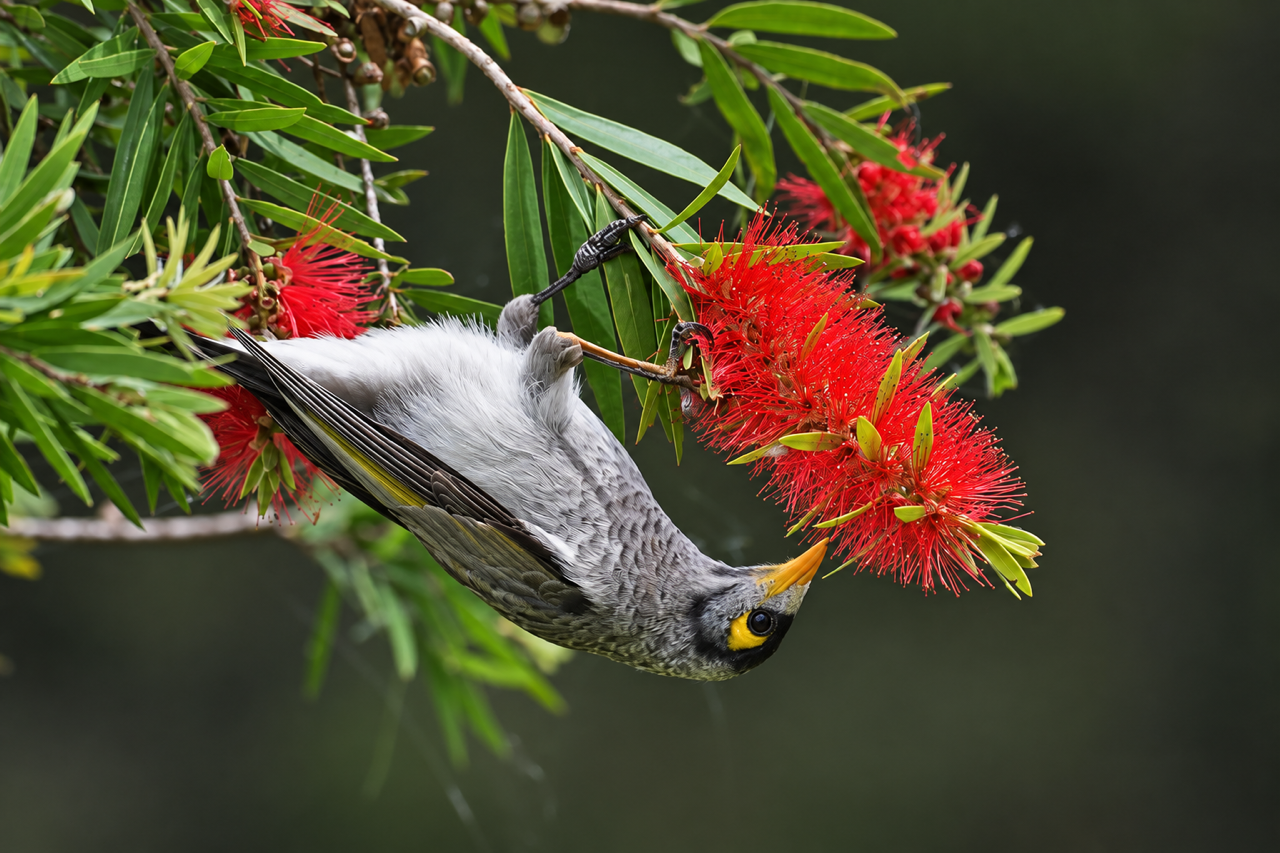
It was a noisy miner, a native Australian bird common in Sydney. She had learned that noisy miners are highly social and territorial. Releasing it where she had found it gave it the best chance of returning to familiar territory and, perhaps, finding its way back to the other birds it belonged with.
It is a very small story.
But perhaps that is precisely why I like it.
We spend a great deal of time trying to name the values we want our families to carry forward: compassion, responsibility, respect, kindness.
But values rarely reveal themselves in the moments we prepare for.
They show up when something interrupts the day.
When helping is inconvenient.
When nobody would blame us for walking away.
There was nothing particularly important at stake, at least not from our human perspective.
For the bird, of course, everything was at stake.
I have been thinking a great deal about invisible capital: the forms of wealth families carry that never appear on a financial balance sheet.
Some of it is easy to recognize. The relationships we build. The trust between generations. The reputation a family earns over time.
But some of it is less visible.
It is how we behave when there is nothing to gain.
Whether we stop when it would be easier to keep going.
Whether another living thing, another person, another responsibility becomes important simply because, for that moment, it has been placed in our hands.
Perhaps this is how character travels through a family.
Not through what parents tell their children to value.
Not even through what children tell us they value.
But through the seemingly insignificant decisions they make when we are no longer beside them.
When children are young, so much of parenting happens within sight.
You watch them walk for the first time. You stand beside playing fields. You drive them to school. You know their friends, their frustrations, their victories and, often, their disappointments.
And then, almost without noticing exactly when it happened, the distance grows.
They leave home.
They choose universities and careers.
They move to other cities, sometimes to the other side of the world.
Their lives become their own.
That is what we raised them to do. But it also changes the way we come to know them.
You no longer witness most of their decisions.
You hear about them afterwards.
A phone call. A photograph. A message sent from an airport, an office, a kitchen or, in this case, a car dealership in Sydney.
Small windows into lives continuing far beyond your field of vision.
And perhaps those small windows tell us more than the moments we once supervised.
Because nobody was standing next to my daughter telling her what she should do.
No father saying, "You cannot leave the bird there."
No mother reminding her to be kind.
No teacher watching.
No audience.
There was simply a frightened little bird trapped somewhere inside a car and a young woman deciding that its predicament had become her responsibility.
In the end, of course, someone was watching.
Just not when the choice was made.
A little later, a short video arrived from Sydney.
In it, the bird flies a few meters to a flower in her garden and begins to eat.
That is all. A few seconds.
I have watched it more times than I would like to admit.
The bird did not go far. It went to the nearest flower and got on with its life, as if nothing had happened.
Every now and then, from far away, you get a small glimpse of the person your child has become.
Today, mine came in a video of a little bird, feeding from a flower in a garden in Sydney.





.png)


