


.svg.png)

One of the icebreaker questions I sometimes ask when I am teaching is this:
“If you could invite anyone, dead or alive, to dinner, who would it be?”
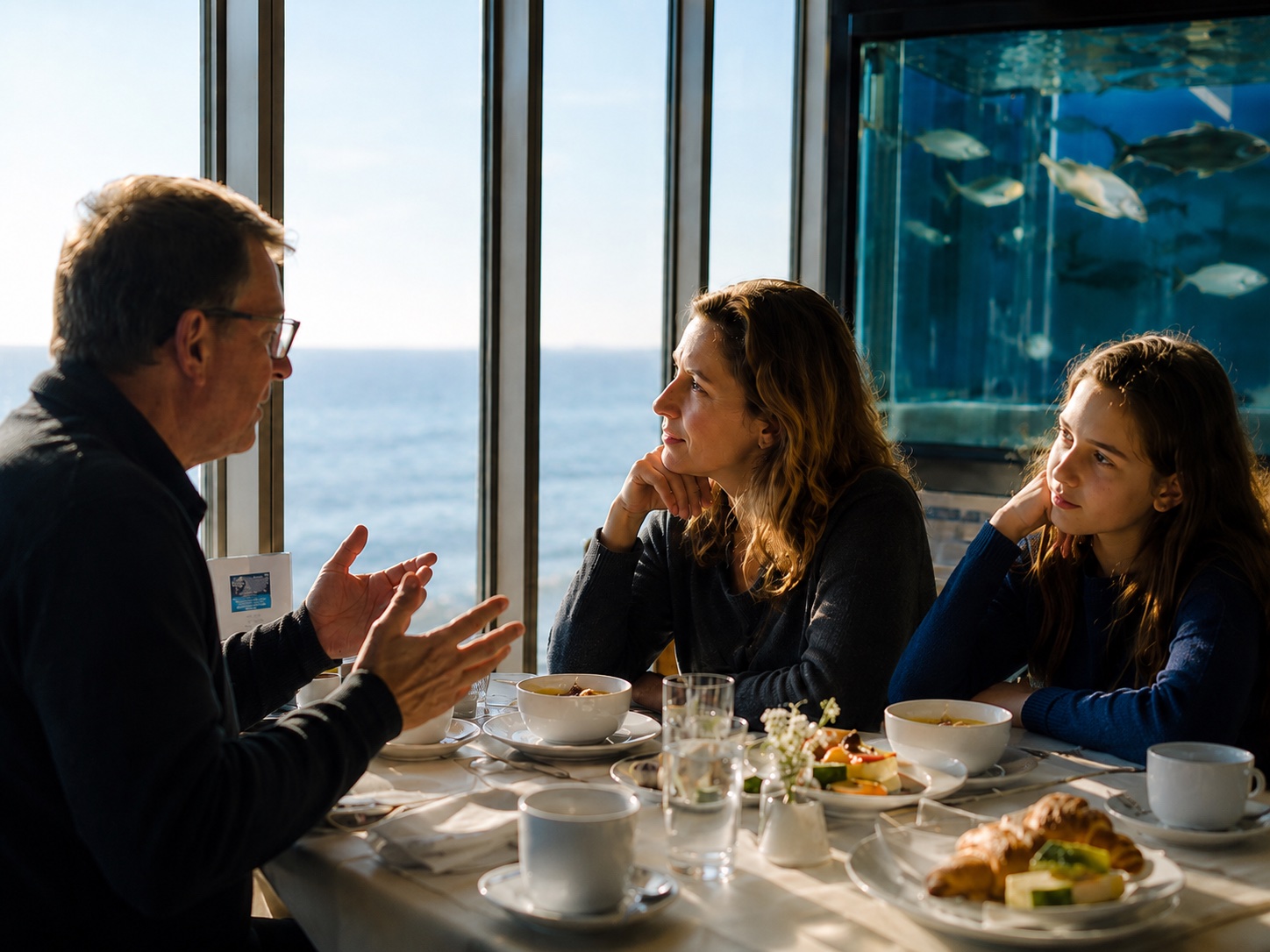
It is a good question because it quickly takes people beyond job titles, credentials, and polite introductions. Some choose a historical figure. Others pick an artist, a political leader, a philosopher, or someone they admire but never had the chance to meet.
The answers often reveal something important. Curiosity. Regret. Admiration. Unfinished business.
I have asked the question many times, but I still struggle to answer it myself.
Would I invite my parents? Or my late wife?
The obvious answer is yes. Of course I would.
I would want to sit with them again. I would want to hear their voices, watch their expressions, and notice all the small things memory slowly begins to soften around the edges.
I would want to tell them what happened after they died.
I would tell my parents how their grandchildren grew up. I would tell them who became serious, who became adventurous, who surprised us, and who still carries something unmistakably theirs.
I would tell them about the lives that unfolded after they were no longer there to witness them. The graduations, marriages, mistakes, recoveries, moves, celebrations, and ordinary Sunday afternoons that became part of the family story.
I would want to tell my late wife about our children. About the people they became. About the moments when I saw her in them, sometimes in a gesture, sometimes in a way of looking at the world, sometimes in a strength they may not even realize came from her.
I would tell her that life continued. That sentence sounds simple, but it is not.
Life continued.
There was grief, confusion, responsibility, and the strange guilt that sometimes accompanies survival. There were moments when moving forward felt like betrayal, even when standing still was impossible.
There was also love again. A new family. More children. A life that did not replace the old one, because lives and people cannot be replaced, but grew around the absence.
There would be so much to say that one dinner could never contain it. That is where the question becomes harder for me.
Because the dinner would have to end.
After the stories, the laughter, the meal, the dessert, and the coffee, there would come that moment when someone looks at the clock. Chairs move. The atmosphere changes. The evening begins to close.
And then I would have to say goodbye again. I am not sure I could do that.
To lose someone once is devastating. To be given them back for a few hours and then lose them a second time might be more than the heart can reasonably carry.
The dinner would have to last forever.
But of course, it could not.
I recently heard a quote attributed to Thích Nhất Hạnh that captured something I had struggled to express:
“It is not impermanence that makes us suffer. What makes us suffer is wanting things to be permanent when they are not.”
We know that people die and that every chapter ends. We understand this intellectually, but we rarely live as though it is true.
We expect the people we love to be there tomorrow. We assume there will be another conversation, another holiday, another chance to repair what has been damaged or say what has been left unsaid.
Until one day, there is not.
Part of grief comes from the loss. Part comes from the mind insisting that reality should have been different.
This should not have happened. This person should still be here. There should have been more time.
Those thoughts are human. They are also asking life to return something it no longer can.
Acceptance does not make the loss acceptable. It does not mean we stop missing people. It means we stop negotiating with what has already happened.
My parents died. My first wife died. Their absence is not a problem I can solve. It is a truth I must learn to carry.
We want one more evening because the relationship mattered. We fear the farewell for the same reason. Pain is part of what love leaves behind.
Perhaps the real question is not only whom we would invite back.
It is which conversations we are still postponing with the people who are here.
People often come to coaching because something has become difficult to avoid. A relationship is strained. A decision has been postponed. A conversation has been rehearsed many times but never held.
Most of the time, they already know what they need to say. They are waiting for a better moment.
They hope the discomfort will pass. They assume there will be more time. They tell themselves they will speak when they feel ready.
Readiness may never come.
The same pattern appears in families, especially those that share a business, property, or wealth across generations.
Parents postpone talking about succession. Siblings avoid discussing resentment. Families delay decisions about leadership, ownership, aging, illness, or the possibility that someone may want to leave.
They often do this in the name of harmony.
Silence can look like peace for a while.
But silence does not settle anything. It leaves the next generation to inherit questions the previous one did not want to answer.
Family governance is often treated as a matter of documents, rules, and formal meetings. Those things have a role. Yet many governance failures begin much earlier, around a dining table where someone decided not to say what needed to be said.
A family can revise a shareholder agreement.
It cannot recover a conversation once the person who needed to be part of it is gone.
Maybe the purpose is not to become better at letting go. Maybe it is to become better at being present before we have to.
To ask the question now.
To make the visit.
To say thank you.
To repair what can still be repaired.







.png)


