

.svg.webp)


There is a moment in the movie Invictus where Nelson Mandela, played by Morgan Freeman, sits with François Pienaar, the captain of the South African rugby team. The conversation is restrained. Unforced. Almost understated. And yet it carries the weight of a nation.
Mandela asks a simple question.
How do you inspire your team to do their very best?
How do you get them to be better than they think they can be?
How do we inspire ourselves to greatness when nothing else will do?
And how do we inspire others to greatness?
Then he says something that I remember so well.
“I sometimes think by using the words of others.”
That line matters. Not because it is clever. But because it reveals something deeply human about leadership under pressure. When circumstances are bigger than us, when the task feels heavier than our own confidence, we borrow strength. We lean on words, stories, symbols that remind us who we are capable of being.
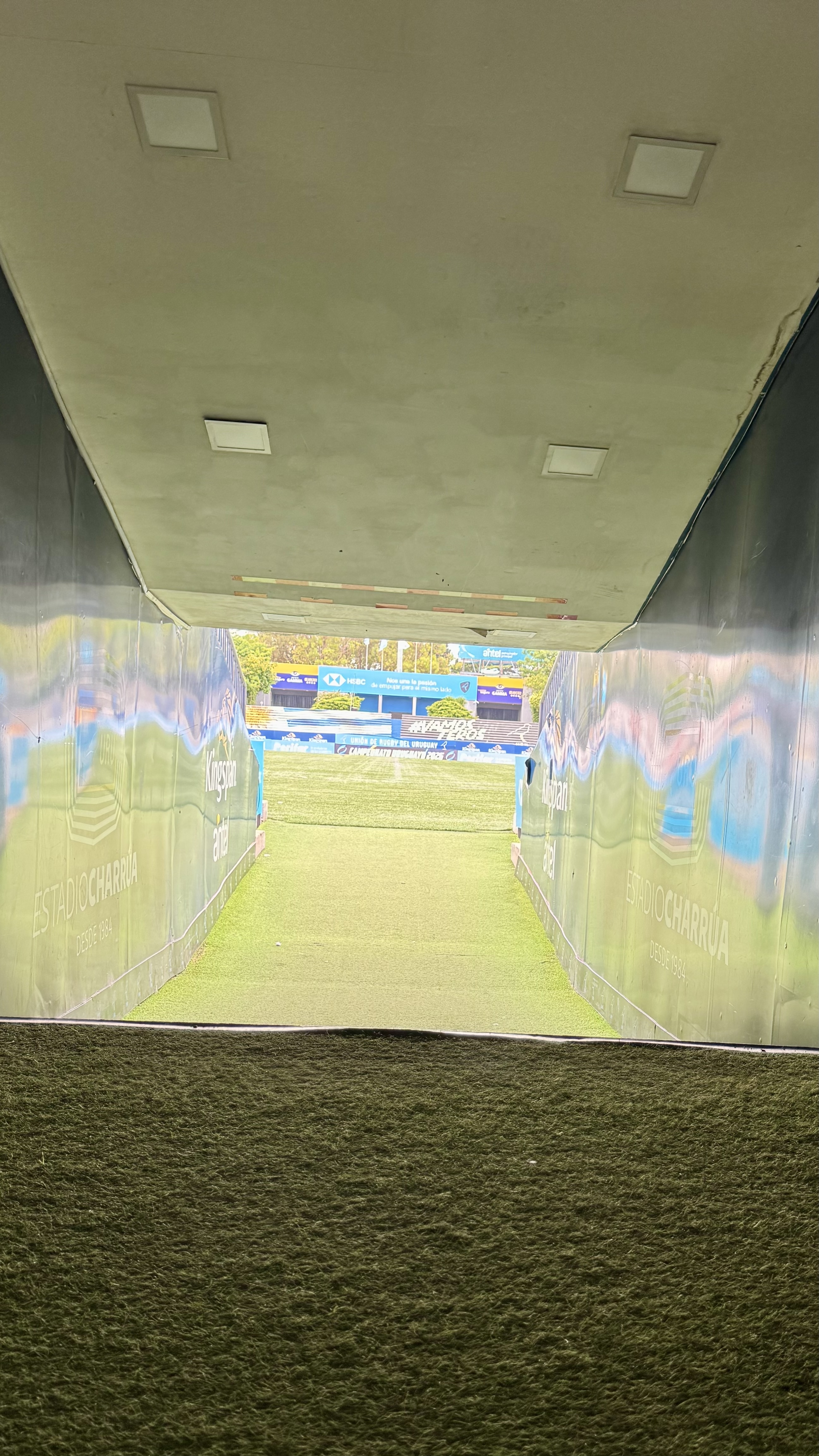
I’ve rewatched that scene more times than I can count. And, as I think about the Road to Georgia and the Uruguayan U20 team, it keeps resurfacing.
This group of players is not lacking talent. They are not lacking effort. They are not lacking pride. But like every young team stepping onto a global stage, they are standing at the edge of something unfamiliar. Expectations rise. Noise increases. Doubt creeps in.
And that is where inspiration becomes something very specific.
Not hype.
Not speeches.
Not pressure disguised as motivation.
Inspiration, at this level, is about helping players exceed their own internal ceilings.
The ceilings they don’t even know they have built.
Young athletes rarely struggle because they do not want enough. They struggle because they are still discovering who they are when things get hard. They are learning how they respond when the game speeds up, when mistakes happen, when the jersey suddenly feels heavier.
So the real question is not how do I inspire them.
The real question is how do I support them to discover what is already inside them.
Mandela understood this intuitively. He did not ask Pienaar to become someone else. He did not ask him to carry the nation alone. He asked him to stand as a mirror. To reflect back to his team something bigger than fear, bigger than habit, bigger than self doubt.
That is the work.
For the Uruguayan U20s, inspiration looks like reminding them of their lineage without trapping them in it. Uruguay rugby carries history, resilience, grit, identity. But history alone does not win matches. Identity must be lived, not inherited.
Inspiration looks like helping them trust their preparation when pressure tempts them to abandon it. It looks like slowing the moment when instinct says rush. It looks like choosing responsibility over reaction.
And sometimes, it looks like words.
There is another quote that often returns to me in these moments. A poem Mandela himself famously drew strength from during imprisonment. Not because it erased suffering, but because it named agency in the middle of it.
“I thank whatever gods may be
For my unconquerable soul.
I am the master of my fate.
I am the captain of my soul.”
These lines are not about bravado. They are about ownership. About inner posture. About the deliberate decision that no matter what unfolds externally, something essential remains intact.
That message matters deeply for young athletes.
You cannot control referees.
You cannot control opponents.
You cannot control momentum once it shifts.
But you can control your response.
You can choose your next action.
You can decide who you are in the moment that tests you.
As a mental performance coach, my role is not to inject belief from the outside. Belief does not work that way. My role is to create conditions where belief can surface. Where players recognize themselves in moments of courage, composure, and connection.
Sometimes that happens through drills.
Sometimes through reflection.
Sometimes through silence.
And sometimes through the borrowed words of others.
Not as slogans. Not as decoration. But as anchors.
Because at the highest level, performance is not about doing more. It is about trusting what is already there.
The Road to Georgia is not just a physical journey. It is an internal one. A gradual shift from “Can I?” to “I will.” From hoping to belong, to realizing that you already do. That you earned your place here. That this jersey is not borrowed, but deserved.
In the end, inspiration is not something you give to a team.
It is something you help them remember.
That they are capable of more than they think.
That pressure does not define them.
That responsibility, when embraced, sharpens rather than crushes.
And that each of them, in their own way, is learning to become the captain of their own soul.











.webp)